Steve Francia
Creativity in Negative Space
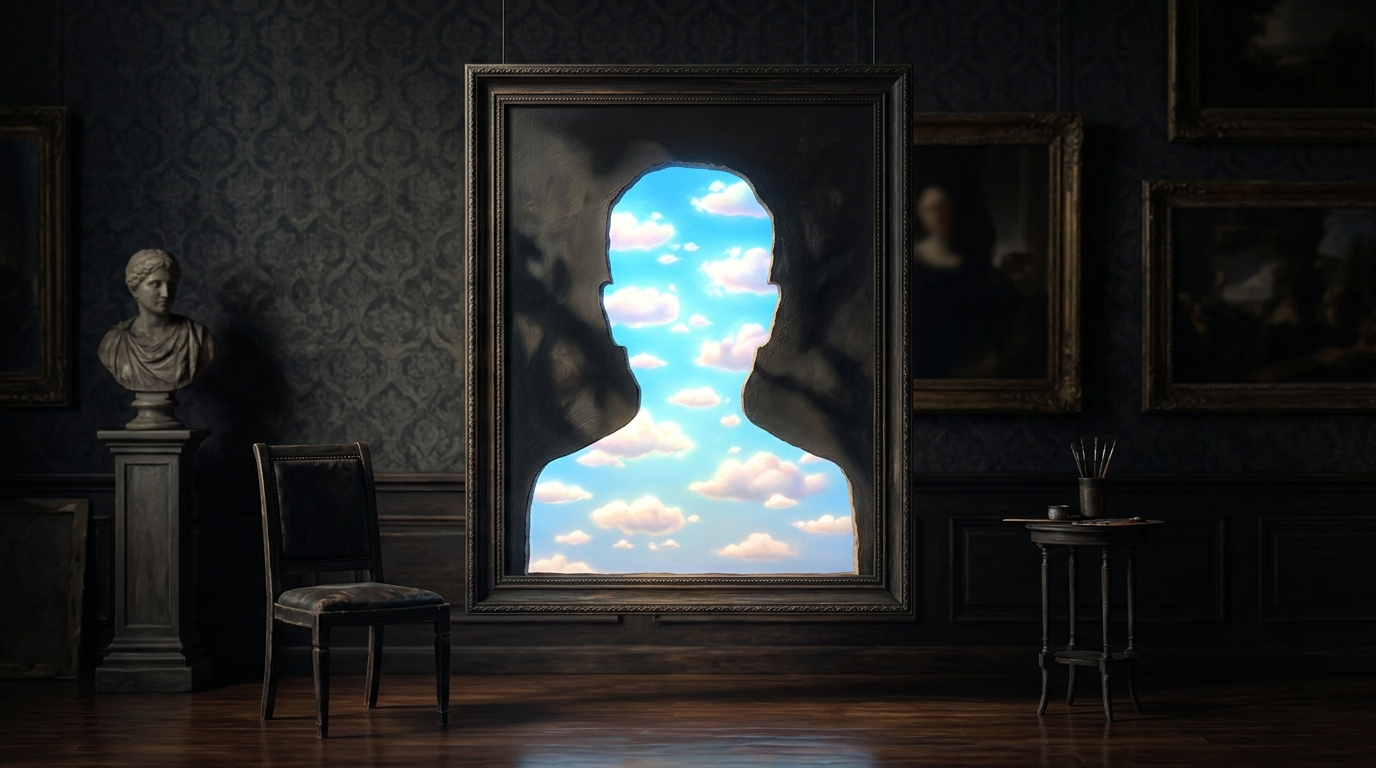
AI excels in positive space, where culture already drew the map. Human creativity lives in negative space: the gap nobody has named yet.
In his recent thought provoking article, Steve Francia, the creator of the Hugo blogging framework, argues that LLMs are incapable of creativity.
Creative work starts with noticing what’s missing, and more data and more compute don’t add that.
AI operates entirely in positive space. Human creativity lives in negative space.
He claims that LLMs, while sophisticated, are merely mathematical representations of their training data, and thus are forever constrained to drawing their results from the distribution of prior art (i.e. “positive space”). Human creativity, he says, is the ability to imagine that which has never existed (i.e. “negative space”).
A model can remix the archive of everything humans have already said. It takes a human with taste, restraint, and a point of view to notice what is still missing, and to put something real into the gap.
Initially, I’m inclined to agree. The bots are phenomenal at replicating and remixing prior art.
I’ve used LLM-powered coding assistants from the “better than Intellisense” early betas of GitHub Copilot to the latest rounds of “engineering via prompt” via fleets of Claude Code sessions. At every stage of capability, I’ve watched the bots demonstrate an astounding ability to amplify existing patterns. When the patterns they amplify are undesired, I have had great success pointing the bots to well established conventions of software design then seeing them meaningfully refactor and improve the health of messy codebases. Seemingly not a week goes by without hearing about some major project conducting a full AI-powered rewrite to a different stack.
Yet, to Steve’s point, each of those experiences is certainly in the “positive space” of repackaging prior art. The bots’ ability to rapidly apply a pattern faster than any human ever could is certainly valuable, but not necessarily creative.
That said, I am unwilling to claim that “AI is incapable of creativity”.
In part, that hesitation stems from repeatedly being proven wrong about my assumptions regarding the limits of AI capabilities.
As one salient example, in the early days of GitHub Copilot, my days were mixed between awe at how often the tool would correctly predict the next several lines of code and fluster for the regularity of hallucinating a library method. I remember my deep skepticism that such tools would ever generate a whole file of compilable, much less useful, code. Now, non-technical folks can request an increasing variety of deterministic work from a computer by stating their desires in plain, ambiguous English.1 If that skepticism could fall, why not skepticism about the possibility of creative machines?
Additionally, I’ve seen glimmers of real creativity from the bots. A few times a week I’ll ask a bot to review chat transcripts and identify common themes/principles from my feedback (e.g. to extract a new agent skill). On occasion, the bot proactively identifies and proposes additional principles to fill thematic gaps. They recognized “negative space”. They demonstrated sparks of creativity.
Even if these sparks are a fluke, and LLMs are indeed fundamentally incapable of creativity, I hesitate to rule out the eventuality of “creative machines”. From stone tools to the printing press to the industrial revolution to the internet, one of the things we humans do best is invent and steer increasingly powerful machines. And a great many smart, creative people are putting their heart and soul into crafting tools and machines with productive capacities approaching or excelling their own.
But why debate the possibility of creative machines? After all, either they will be invented or they won’t and the world will still continue in its reckoning with the advent of increasingly capable, possibly intelligent machines.
More broadly, why debate any form of “will AI ever be able to do X?”
I suspect these questions stem from a perceived need to identify something uniquely human. After all, the thinking goes, if the bots will never be able to do X, then that’s an area where humans will always have value.
But, human value doesn’t derive from uniqueness or exceptionalism. When calling a support hotline, there’s value in connecting with a human operator, even if an automated assistant could solve the problem faster. Instead, I believe human value stems from our ability to care about enriching each others’ lives.
Art/writing/music/etc. are not valuable merely due to the prowess and talents of their creators, but because of the message their human creators sought to bring to the world. Similarly, in my profession, software is not valuable simply because of the technical capabilities of the engineers who write it, but because it improves (or ought to improve) the lives of the people who use it.
So, as we build increasingly capable machines, let us also remember to employ these powerful tools in service of enriching the lives of our fellow humankind.
For example, here’s the story of one of my non-technical friends who built the iOS Calendar widget she always wanted. ↩︎